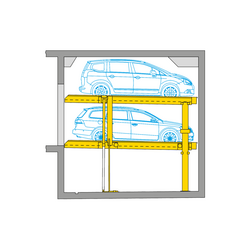
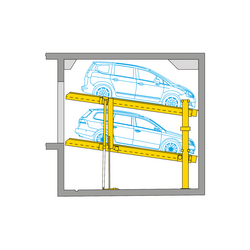
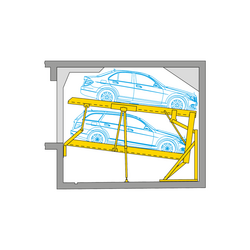
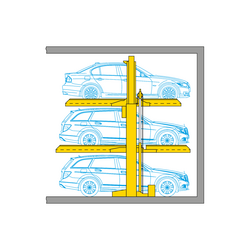
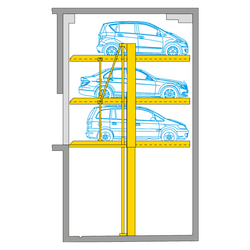
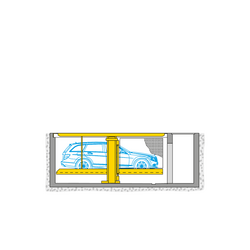
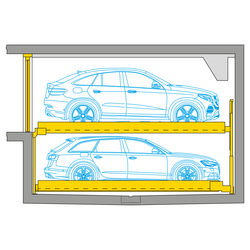
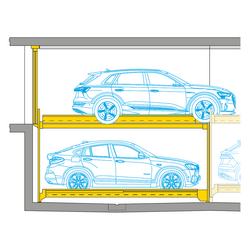
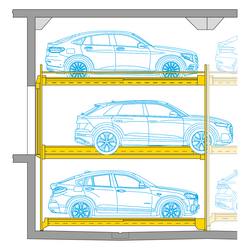
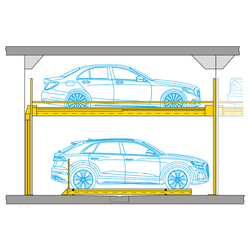
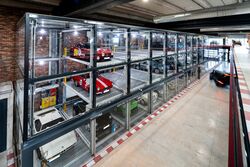
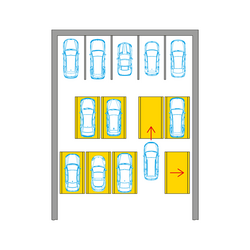
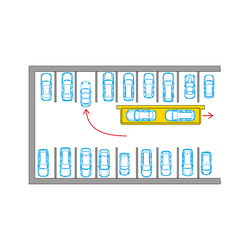
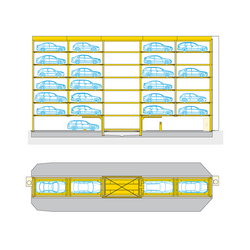
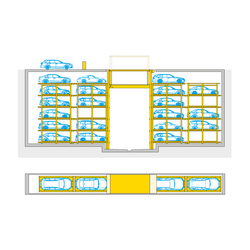
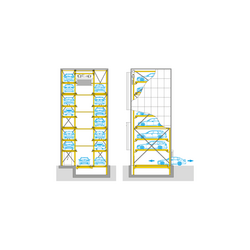
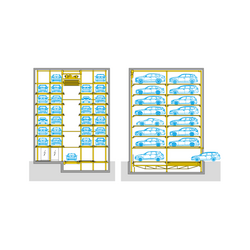
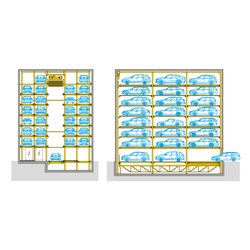
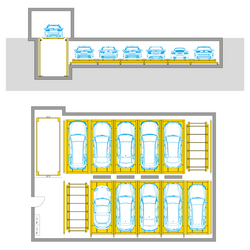
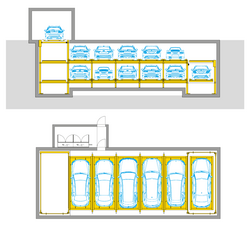
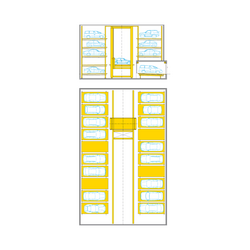
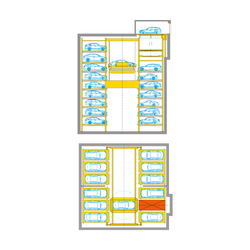
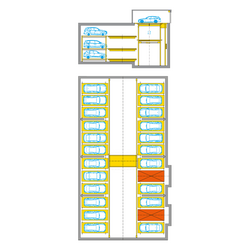
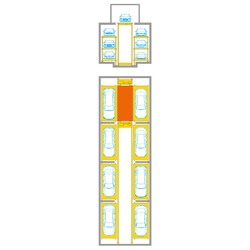
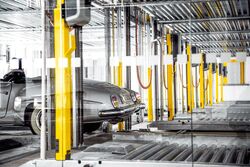
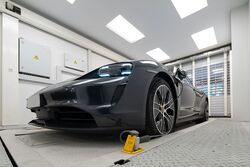
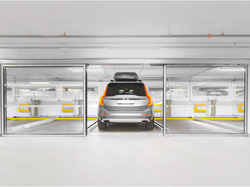
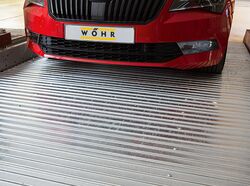
Car on a parking pallet in a parking system

News

The winners of the RE:CONNECT Stuttgart student competition have been announced!

We are delighted to announce the winners of our RE:CONNECT Stuttgart student competition.
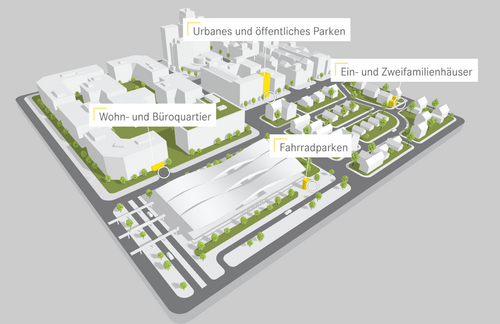
The aim of RE:CONNECT Stuttgart was to develop new concepts using WÖHR’s customisable parking systems and to utilise the space thus created within the city in a more responsible, sustainable and efficient manner.

Last Thursday, our jury selected the following winners:

1st place: Daniel Afriyie Owusu (University of Hanover) with the design “Züblin Hub – Mechanical Reactivation of Urban Heritage”

2nd place: Sophia Schabel & Tobias Krickl (Stuttgart University of Applied Sciences & DHBW Lörrach) with the design “0711SHIFT: Stuttgart shifts up a gear – a flexible space for mobility and changing uses”

3rd place: Franca Föcking (Düsseldorf University of Applied Sciences) with the design “RE:STREET: A temporary intervention for Bilker Straße as a space of possibility for car-free urban development”

We congratulate all the winners and would like to thank all participants warmly for their exciting entries!

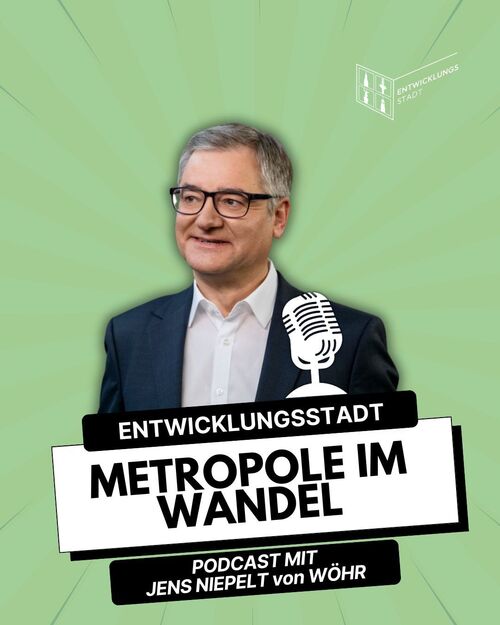
URBAN DEVELOPMENT PODCAST: WÖHR BIKESAFE AS A CONCEPT FOR OPTIMISING BICYCLE PARKING SPACE

In an interview with Björn Leffler from ENTWICKLUNGSSTADT on the key topic of cycle parking, Jens Niepelt explains how the WÖHR Bikesafe is revolutionising parking!

Amidst a shortage of space and the mobility transition, a new area of focus is emerging in urban planning: cycle parking. This is precisely what Björn Leffler (ENTWICKLUNGSSTADT) and Jens Niepelt (WÖHR) discuss in the podcast – and they demonstrate why bike parking has long been more than just ‘a few bike racks on the pavement’. After all, the quality of bike parking plays a key role in determining whether people use their bikes regularly, whether neighbourhoods function smoothly – and how attractive public spaces actually remain.

It becomes clear during the discussion that cycle parking is infrastructure. And with systems such as the WÖHR Bikesafe, this issue can be resolved safely, in a space-saving manner and in a way that integrates with the architecture – a real game-changer for cities that want to promote cycling without creating additional conflicts over space.

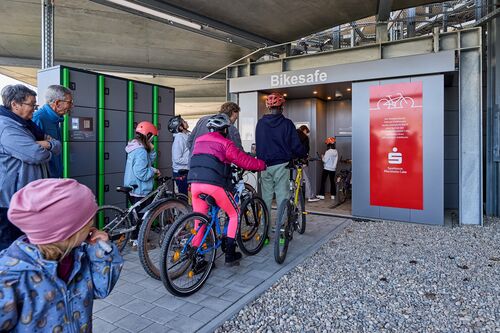
Children on bicycles stand in front of the entrance to the automated bicycle parking system

Open Day at Bikesafe Calw – a resounding success!

On 22 March, the Calw Health Campus opened its doors – and the response was overwhelming. Hundreds of visitors came along to find out about modern healthcare services, new campus facilities and forward-thinking mobility solutions.

A particular crowd-puller: the fully automatic WÖHR BIKESAFE.
Many guests took the opportunity to test the system in action and find out about secure, space-saving bicycle parking in urban environments.

Smart mobility meets a health hub – it is precisely this combination that makes the campus a shining example of modern infrastructure in the region.

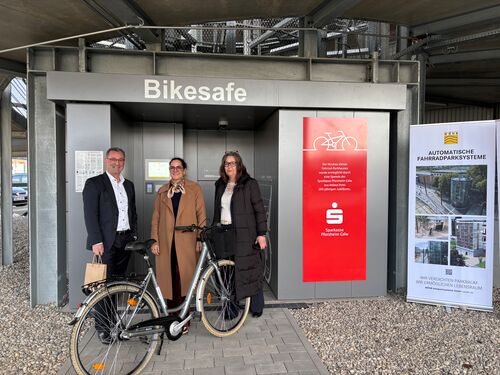
Three people are standing with a bicycle in front of the entrance to the automated bicycle parking system

WÖHR Bikesafe opens at the Calw Health Centre!

On Wednesday 18 March 2026, we officially opened our WÖHR Bikesafe at the Calw Health Centre!
The automated bicycle parking system provides secure parking for 122 bicycles.

What makes the Bikesafe in Calw special is that it has been integrated into the central shaft of the car park. This means that the otherwise unused space in the central shaft of the ramp has been put to efficient use as a bicycle garage.

The Bikesafe is now available to staff and visitors at the Calw Clinics.
Booking a parking space and a locker with a battery charging facility is easily done via the app.

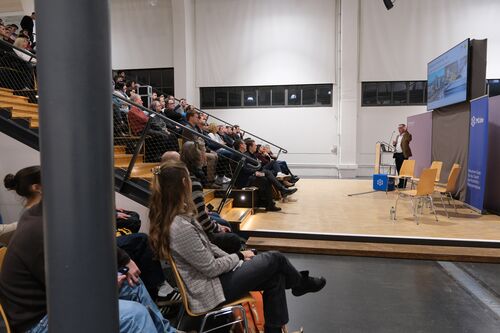
A room with a person at the lectern and people sitting on a staircase

WÖHR speaker at ‘The Future of Mobility – Next Level Parking’

How can we activate the land reserves in our cities?

Our CEO Markus Hofheinz provided answers to this question last Thursday at the MCube – Munich Cluster for the Future of Mobility in Metropolitan Regions Speaker Series ‘Future of Mobility – Parking Next Level’.

Visionaries from the fields of law, research, consulting and industry gathered at the German Museum of Transport – and we were able to make a key contribution.

Our conclusion:
The mobility of the future needs neither more concrete nor more land consumption –
it needs efficiency, intelligence and the courage to embrace new solutions.
This is exactly where we come in.

Thank you to Johanna Wantzen and Oliver May-Beckmann from MCube, to Marco Eisenack for moderating, and to all the participants who made this evening an inspiring impetus for the urban future.